
by Cathedral Curator Fran Hollinrake
As befitting a building of its age and significance, it is no surprise that St Magnus Cathedral appears in several works of literature, from Viking sagas to twentieth-century poetry. Whilst conducting research for a special curator tour, I found many authors and works with connections to the cathedral, and I would like to share a few of them here.
Edwin Muir (1887-1959)
The west window of the cathedral was created in 1987 for the 850th anniversary of the foundation date. The window was designed by Scottish artist Crear McCartney, who filled it with Orkney themes and Christian imagery. In his own explanation of the symbolism, the artist revealed that he was inspired by Muir’s poem The Transfiguration, particularly the line ‘flower and flock entwined as in a morning field’.
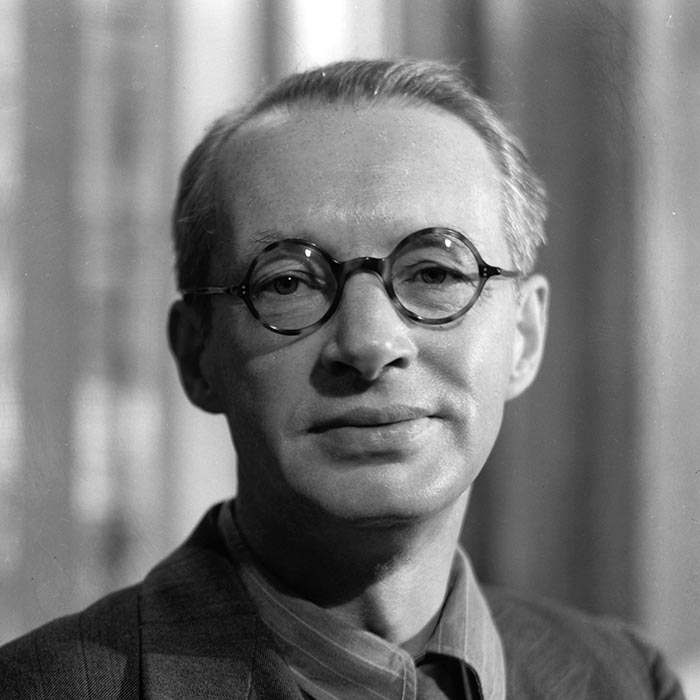
Muir was born in Deerness in 1887 and moved to Wyre with his family whilst still a baby. He was brought up there, in what he would later remember as an idyllic place, until the whole family was forced to move, due to their inability to keep up the rental payment on the farm where they lived. They relocated to Glasgow, which was a terrible shock to a sensitive 14-year old Edwin Muir. It was a traumatic wrench to go from what he saw as paradise, to the dirty, noisy slums of poverty-stricken industrial Glasgow, and the misery was compounded when, within the next few years, both his parents and two of his brothers died. Although he never settled in Orkney again, Muir returned often in his written works to that rural version of Eden, from which he was so brutally cast out. He had an interesting life, and he and his wife Willa (née Anderson, a Shetlander) travelled widely, writing and translating. For a time, he was Warden of Newbattle Abbey College in Midlothian, where he encouraged and supported a young George Mackay Brown in his first steps towards becoming a writer.
During his traumatic adolescence, Muir also lost his childhood Presbyterian faith, seeing the Kirk as an oppressive and joyless organisation. But after going through many years of analysis he seems to have had a reawakening of some sort of spiritual belief. In the poem The Transfiguration he imagines what it would be like to see the world as it would have been, had Man not been cast out from the Garden of Eden.
Extract from The Transfiguration
So from the ground we felt that virtue branch
Through all our veins till we were whole, our wrists
As fresh and pure as water from a well,
Our hands made new to handle holy things,
The source of all our seeing rinsed and cleansed
Till earth and light and water entering there
Gave back to us the clear unfallen world.
We would have thrown our clothes away for lightness,
But that even they, though sour and travel stained,
Seemed, like our flesh, made of immortal substance,
And the soiled flax and wool lay light upon us
Like friendly wonders, flower and flock entwined
As in a morning field….
George Mackay Brown (1921-1996)
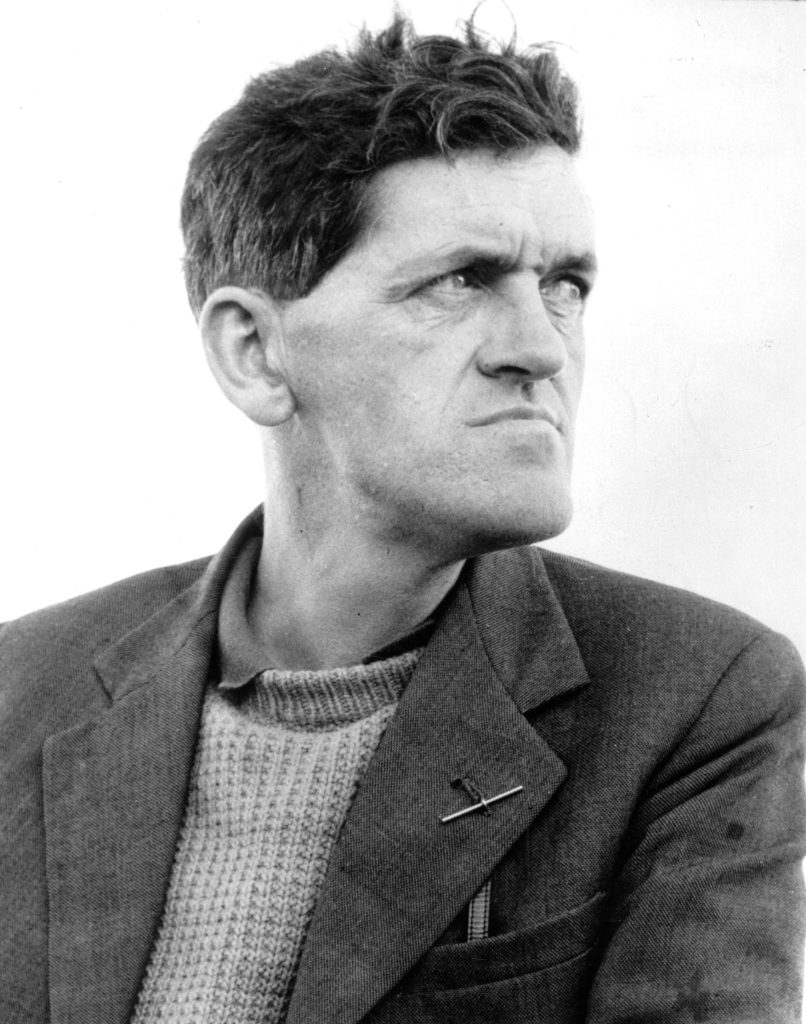
GMB is probably Orkney’s best-known writer. During his lifetime he was a prolific producer of poems, novels, plays, and newspaper columns, and since his death in 1996 his reputation in the literary world has grown with every passing year.
A convert to Catholicism in adulthood, GMB was fascinated with the story of St Magnus and what he saw as Magnus’s martyrdom. In one of his novels, Magnus, GMB combines two stories; that of the killing of the Orkney earl in 1117, and the other of the murder of anti-Nazi campaigner and Lutheran pastor Dietrich Bonhoeffer, in a Nazi death camp in 1945.
In 1987, to celebrate the cathedral’s 850th anniversary and to raise money for restoration works, Elizabeth Scarth, Countess Temple of Stowe, pulled together four works by famous poets (all of whom she knew personally); Christopher Fry, Seamus Heaney, Ted Hughes (then Poet Laureate) and George Mackay Brown. She published the works, together entitled Four Poets for St Magnus, in a beautifully bound edition of only 100 copies, each signed by all four poets. GMB’s contribution, The Kirk and the Ship, draws upon the comparison of a ship and a church. The main public part of a church or cathedral is called a nave, a word that originates from the Latin Navis, meaning ship. This is the same root of the words ‘navy’ and ‘navigate’. The nave therefore is like a ship, carrying us, the passengers, on our journey through life, be the waters calm or stormy. In the poem GMB also mentions the first stonemasons to work on the cathedral, whose marks can still be seen on the stone walls to this day. He makes reference also to Earl Rognvald, who built the cathedral and went on a long journey to Jerusalem.
The Kirk and the Ship
The master mason said
‘Sail to the island of Eday
And quarry blocks of yellow stone’.
Others drove oxen to the Head of Holland
Where sandstone is red.
The lark’s skein
About and about the April hill was thrown.
They did that work, the labouring Orkneymen.
Masons from Durham, strange speakers,
Squared the blocks rough-hewn,
They chiselled their marks, setting stone on stone,
And the Kirkwall villagers
Paused, and shook wondering heads, and went on.
And the kirk grew, like a lovely ship
Freighted with psalm and ceremony, blissward blown.
He that ordered the minster
Fluttered in a frailer ship
Across the Mediterranean
With pauses for dalliance, siege, piracy
But always, Jerusalem-drawn.
Pillars soared up, red as fire or blood,
And in one they laid
Their martyr, Magnus: his breached bellchambered bone.
Earl Rognvald had started life as Kali, and he was born in Norway, son of Kol, a Norwegian nobleman, and Gunnhild, sister of St Magnus. As a boy he heard many tales about his Uncle Magnus, Earl of Orkney, and as he grew, he was determined to travel to the islands and claimed Magnus’s earldom for himself. Encouraged by his parents, he changed his name to Rognvald and made a bid for political power, promising the people of Orkney that if he became their ruler he would have Magnus made into a saint, and that he would build a magnificent stone minster in his uncle’s honour. This came to pass, and in 1137 the foundations of the cathedral were laid, with his father Kol in charge of the building project.
Once the cathedral had been consecrated (in about 1150), Rognvald took himself, the bishop, a group of friends and a fleet of fifteen ships on a great crusade/pilgrimage to the Holy Land, returning three years later.
In 1993 an artwork was created for that year’s St Magnus Festival. It comprises fourteen huge canvas sails, made by a local chandler and painted by four local artists – Andrew Parkinson, Mary Scott, Erlend Brown and Dave Jackson. The sails tell the story of Rognvald Kolsson’s trip to Jerusalem and back again, and at the bottom of each is a wooden baton bearing a micro-poem by George Mackay Brown. The sails were given to Orkney Islands Council after their first appearance, and they have been displayed in the cathedral several times since then, most recently during the 2025 Island Games, hosted in Orkney for the first time.
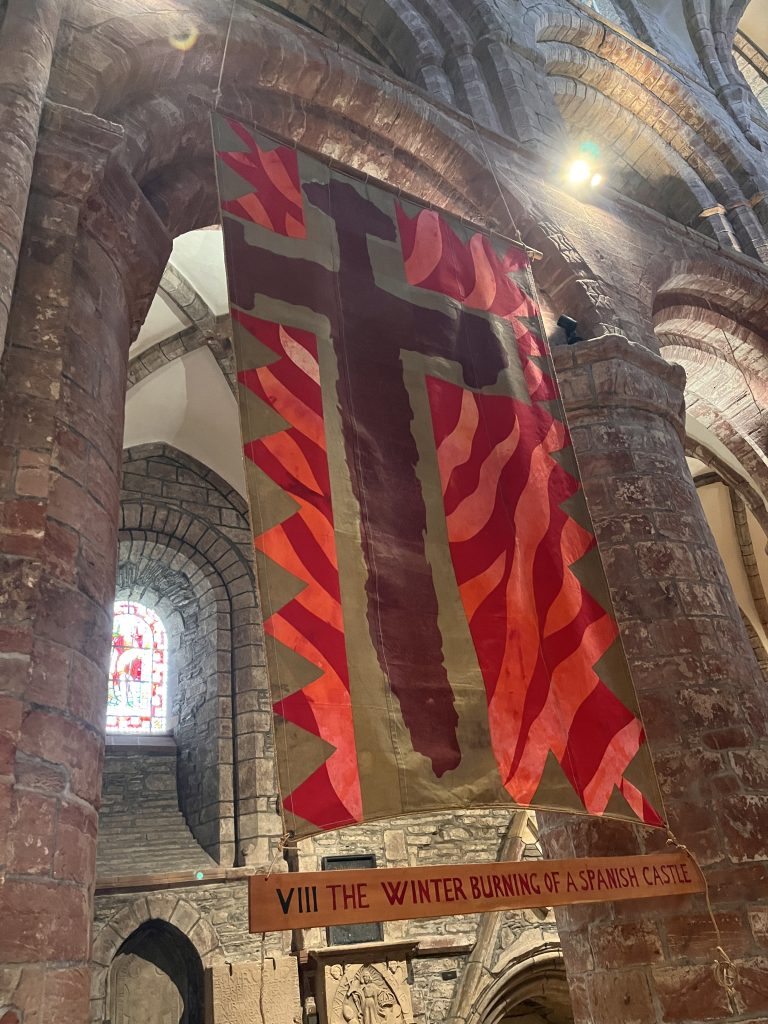
Here are the fourteen tiny GMB poems in full:
Sails in St Magnus: Rognvald’s Journey to the Holy Land
I Fifteen keels laid in Norway for Jerusalem-farers
II In Kirkwall, the first red Saint Magnus stones
III An Orkney wintering, stone poems in Orkahowe, “great treasure”
IV Bishop William: a blessing on the pilgrim sails
V Westerly gale in Biscay, salt in the bread broken
VI The Bishop’s ship a small storm-tossed kirk
VII Rognvald and Ermingarde: roses, lyrics in Narbonne
VIII The winter burning of a Spanish castle
IX Eindred’s desertion, five sails dwindling eastward
X A dromond taken, the torrent of molten gold
XI Thorbjorn Black, poet, dead under sunbright stones
XII Palm branches in Jerusalem – the “via crucis”
XIII Byzantium, golden city: the ships and the domes
XIV The return: drying sails in the lofts of St Magnus
Vera Rich (1936-2009)
A London-born translator and poet, Vera Rich was best-known in literary circles for translating poetic works from Ukrainian and Belarussian into English. In 1963 she visited Orkney to attend the Hakon Hakonsson Conference, given in honour of Norway’s King Hakon IV, who died in 1263 in the Bishop’s Palace in Kirkwall. He was buried in St Magnus Cathedral for four months before his body was returned to Norway in March 1264. Vera Rich was attracted to the conference as she had studied Old Norse at Oxford University, and learned about St Magnus’s grandfather, Thorfinn the Mighty. The year after her visit, Rich produced a volume of poetry called Heritage of Dreams; a Sketchbook in Verse. The collection includes a translation of a poem about Thorfinn,:
Bright sun shall loom swartly,
Sink earth in tides brinkless,
Heav’n be split and severed,
Swell waves o’er all fell-land,
Ere perchance appear a
Prince greater than Thorfinn
In the Isles (God aid the
Earl) the lord of war-men.
Other poems by Rich in the collection were inspired by aspects of the history of Orkney, and following a visit to the cathedral, where she heard someone playing the organ, she wrote this poem:
In the Cathedral of St Magnus
Here, like a grove of God,
Strong arches bend stone branches in a tall
Paean of polychrome; like jagged leaves,
Dog-toothing fringes arcs of majesty.
Dark forest shadows flit across a floor
Flowered with changing light, while, like the beat
Of a far cataract, the organ thrills;
Now like the peal
Of a high lark, it soars,
Now like a shower
Of summer rain, it pours,
Now like a wind-tossed sea
Pounding the shores…
Now like the thunder-chariot of God
It roars
Its tempest on the soul, the primal joy
Or elemental worship caught, distilled
By hands, God-blessed with skill,
Into the clarity of sun and rain
And silence…
I lean back against the stones,
Red-shadowed, strong as prayer and cool as time.
Hugh Miller (1802-1856)
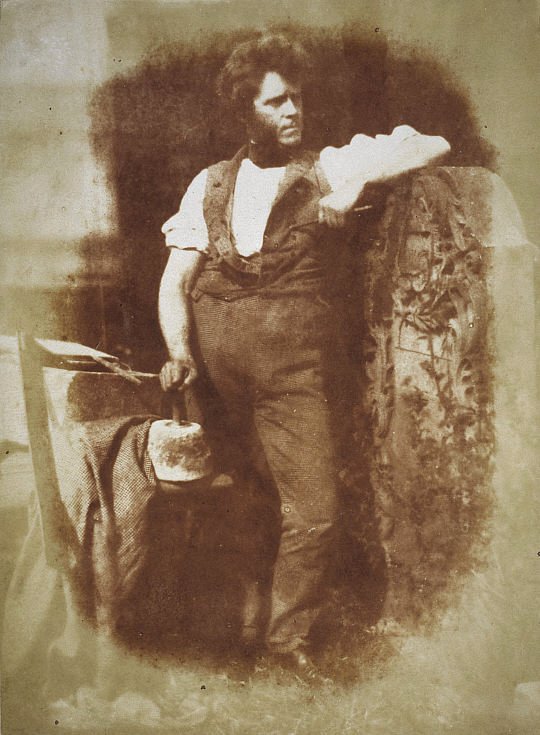
A stonemason, a poet and a sculptor, Hugh Miller was from Cromarty in the Black Isle. He was apprenticed to a stone mason at the aged of 17 and developed a life-long interest in geology and palaeontology, as well as developing a literary career. Miller visited Orkney in 1846, where he found rare fish fossils and analysed the Orkney bedrock – samples of his collecting can still be seen in the Stromness Museum.
An account of his trip to Orkney appeared in his Rambles of a Geologist, including a detailed description of St Magnus Cathedral. The cathedral at the time looked very different to its appearance today; the choir and east end areas were screened off, and the church services took place inside that enclosed area, whilst the nave remained empty and largely unused. Gravestones still lay on the floor, the windows were either boarded up or held plain glass, and the whole interior was covered in a strange green moss, giving it an otherworldly aspect. Miller describes the architecture and use of stone at some length:
The antiquities of the burgh next engaged me; and, as became its dignity and importance, I began with the Cathedral, a building imposing enough to rank among the most impressive of its class anywhere, but whose peculiar setting in this remote northern country, joined to the associations of its early history with the Scandinavian Rollos, Sigurds, Einars, and Hacos of our dingier chronicles, serve greatly to enhance its interest. It is a noble pile, built of a dark-tinted Old Red Sandstone,—a stone which, though much too sombre for adequately developing the elegancies of the Grecian or Roman architecture…. harmonizes well with the massier and less florid styles of the Gothic. The round arch of that ancient Norman school which was at one time so generally recognised as Saxon, prevails in the edifice, and marks out its older portions.
Miller then goes on to mention the cathedral’s Mort Brod, a 17th-century wooden death-board hanging in the north nave aisle:
I saw a grotesque hatchment high up among the arches….The painter had set himself, with, I doubt not, fair moral intent, to exhibit a skeleton wrapped up in a winding sheet; but…. his skill had failed in seconding his intentions, and, instead of achieving a Death in a shroud, he had achieved but a monkey grinning in a towel. His contemporaries….do not seem to have found out the mistake, and so the betowelled monkey has come to hold a conspicuous place among the solemnities of the Cathedral.
It is difficult, after reading that, to see the Mort Brod’s shrouded skeleton as being anything other than a monkey grinning in a towel…!
Dorothy Dunnett (1923-2001)
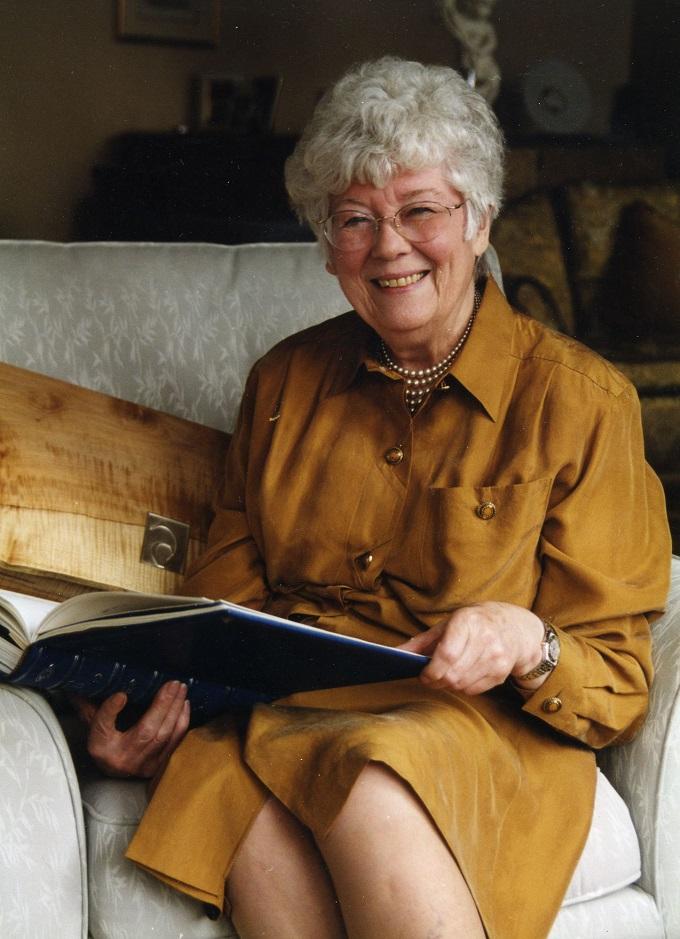
Dunnett, born in Dunfermline, was a professional and very well-regarded portrait painter, but she also had a highly successful career as a historical novelist. She wrote two multi-volume series of books, one of which centres on a 16th-century Scottish nobleman, as well as a stand-alone novel called King Hereafter, which tells the remarkable story of Thorfinn the Mighty, Earl of Orkney and grandfather to St Magnus.
King Hereafter is a densely plotted and meticulously researched book, filled with rich imagery and absorbing characters. Dunnett created a plot partially set in Orkney, as Thorfinn builds his great Christ Kirk, the church in Birsay that was the forerunner of the cathedral, and the original burial place of Magnus. She also puts forward a very convincing argument that Thorfinn of Orkney and Macbeth of Scotland were one and the same man. Here she describes the aftermath of one of Thorfinn’s many battles:
Later, in such a fight, you found the wounds you had no recollection of. Later, with your ears deadened and aching, you recalled dimly the violence of the noise: the thunderous sound of timber crashing on timber; the searing din of metal on metal and the hollow drumming made by the shields, and the stamping of feet in the boat-shells; and the soft thud of axe and of sword-edge as they sank into cloth, into hide, into flesh. And always, at sea, the swinging shadows of gulls, so that the cries from above and below were as one.
In the north transept of the cathedral can be seen a stained-glass window depicting Thorfinn the Mighty swathed in a green cloak. It is very popular with the world’s many Dorothy Dunnett fans.
Walter Scott (1771-1832)
In his lifetime, and for years afterwards, Scott was the most popular and successful novelist and poet of his age. His works are still widely read across the world, translated into many languages, and his reputation influences Scottish literature to this day.
In 1814 Scott embarked upon a tour of the lighthouses of Scotland, in his role as a commissioner for the Northern Lighthouse Board. For six weeks he and his fellow commissioners visited lights, and came ashore to dine with local worthies and to see the sights. That trip was described in a diary that he wrote at the time, now republished as The Voyage of the Pharos; Walter Scott’s Cruise Around Scotland in 1814. The journey started in Leith and proceeded first to Shetland, which made a very favourable impression on the writer. The visit to various parts of Orkney did not go so well, and Scott’s opinion of Kirkwall was condensed into a little poem:
‘Tis a base little borough, both dirty and mean—
There is nothing to hear, and there’s nought to be seen,
Save a church, where, of old times, a prelate harangued,
And a palace that’s built by an earl that was hanged
Later in the trip Scott and his party visited Stromness, which the writer described in his diary in disparaging terms:
Stromness is a dirty, straggling little town, which cannot be traversed by a cart, or even by a horse, for there are stairs up and down, even in the principal streets. We paraded its whole length like turkeys on a string, I suppose to satisfy ourselves that there was a worse town in the Orkneys than the metropolis, Kirkwall.
During that Stromness sojourn Scott made a visit to the notable Stromness wise woman Bessie Millie, renowned for selling fair winds to sailors from her stone-built hut on top of Brinkie’s Brae. Bessie told Scott that she had met John Gow, a notorious figure in Orkney history who was hanged for piracy in 1725, and this was to prove a significant moment for Scott; he went on to write his novel The Pirate, based on the life of Pirate Gow, and which also featured an old wise woman, Norna of the Fitfu’ Head, clearly inspired by his encounter with Bessie Millie.
The anti-hero of the novel is Captain Clement Cleveland. In one episode in the book he has been arrested, but is allowed to roam free as long as there are guards with him. His favourite place to wander is within St Magnus Cathedral:
‘It may well be believed, that, under such circumstances, Cleveland had no desire to seek any place of public resort, conscious that he was the object of a mixed feeling of curiosity and terror. His favourite place of exercise, therefore, was the external aisles of the Cathedral of Saint Magnus, of which the eastern end alone is fitted up for public worship. This solemn old edifice, having escaped the ravage which attended the first convulsions of the Reformation, still retains some appearance of episcopal dignity. This place of worship is separated by a screen from the nave and western limb of the cross, and the whole is preserved in a state of cleanliness and decency, which might be well proposed as an example to the proud piles of Westminster and St. Paul’s.
It was in this exterior part of the Cathedral that Cleveland was permitted to walk…. The place itself was well suited to his melancholy circumstances. The lofty and vaulted roof rises upon ranges of Saxon pillars, of massive size, four of which, still larger than the rest, once supported the lofty spire….The light is admitted at the eastern end through a lofty, well-proportioned, and richly-ornamented Gothic window; and the pavement is covered with inscriptions, in different languages, distinguishing the graves of noble Orcadians who have at different times been deposited within the sacred precincts. Here walked Cleveland, musing over the events of a misspent life, which, it seemed probable, might be brought to a violent and shameful close, while he was yet in the prime of youth.
“With these dead,” he said, looking on the pavement, “shall I soon be numbered—but no holy man will speak a blessing; no friendly hand register an inscription; no proud descendant sculpture armorial bearings over the grave of the pirate Cleveland. My whitening bones will swing in the gibbet-irons, on some wild beach or lonely cape, that will be esteemed fatal and accursed for my sake. The old mariner, as he passes the Sound, will shake his head, and tell of my name and actions, as a warning to his younger comrades”.
Rognvald Kali Kolsson (c1100-1158)
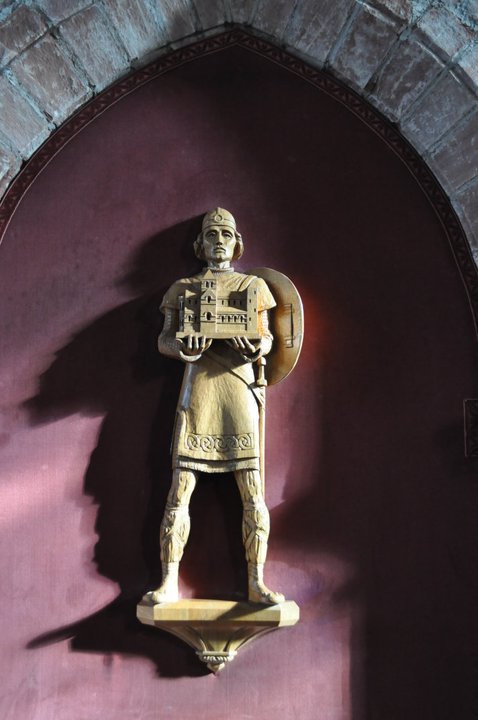
The story of Rognvald’s trip to Jerusalem is told over several chapters of The Orkneyinga Saga, and it forms a key part of the narrative. But Rognvald had many other adventures, and as befitting his noble status, he was often accompanied by a skald. Skalds were court poets, who attended monarchs and nobles, writing epic, romantic and comic poems for the entertainment of the company. The verses followed complex patterns and literary devices such as kennings, making it less likely that the words have changed over time. The skaldic verses were often composed at the time of the event or very soon after, making them almost a form a reportage, and thus a recording of events very close to the time they happened. Rognvald himself was a skaldic poet, and dozens of his poems have survived to this day.
In 2016 Ian Crockett, a poet himself, set to translating 41 of the verses attributed to Rognvald. Rather than a word-for-word translation, Crockett made poetry into poetry, to very good effect. The results were published in Crimsoning the Eagle’s Claw, and they make very entertaining reading – even more so when they are spoken aloud, as skaldic poetry would have been.
One of the most famous of Rognvald’s poems is the ‘Nine Skills,’ where he lists some of his great talents. Crockett translates the verse like this:
Who’ll challenge my nine skills?
I’m champion at chess,
Canny recalling runes,
Well-read, a red-hot smith;
Some say I shoot and ski
And scull skilfully too.
Best of all, I’ve mastered
Harp-play and poetry.
Crockett also composed his own poem in tribute to Rognvald:
Rognvald Kali Kolsson
– skull-cleaver, wave-weaver –
Your mind engaged with minds
Before opening men’s veins;
Cathedral, harbour, hall
Shall rehearse your verses –
Skalds and skiff-men affirm
Kol’s word-skilled blade-bright son.
Eric Linklater (1899-1974)
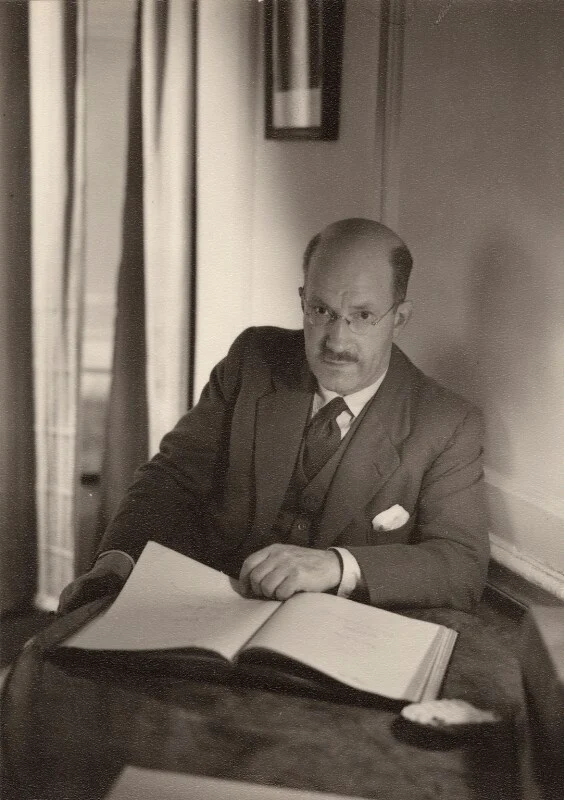
Orcadian Eric Linklater had a long and varied writing career as a novelist, biographer, journalist, historian and author of children’s books. In his popular book Orkney and Shetland he writes about his love for the islands, and muses on various aspects of history, culture and the natural environment. In this passage, he wonders about Rognvald’s father, Kol, who is described in The Orkneyinga Saga as the ‘architect’ of the cathedral:
…one would like to know more about Kol. One knows nothing at all about him, except by inference: he was certainly a man of vision, a man of genius. He conceived a great and glowing idea, and by the exercise of talent, ingenuity, perseverance and ruthless allegiance to his idea, brought it into splendid being: he built a cathedral that to this day is the honour of Orkney and the Norsemen’s noblest memorial.
And was that Kol’s intention from the beginning? Did he push Rognvald into political adventure so that he, Kol, might have the proper excuse and a sufficient revenue to build a cathedral? Did he summon the hard-working ghost of St Magnus to help him, and play upon the superstition of simple Orkneymen to reinforce his purpose? On the evidence of what he made – the sonorous evidence of rose-red columns and echoing aisles under a clerestory beckoning to the northern sun – he was an artist; and in pursuance of his purpose an artist has no conscience.
It may well be that Magnus the Saint and Rognvald the Crusader owe the best of their fame to that almost unknown and quite inscrutable Norwegian, Kol Kali’s son, who had no desire to be canonized or crowned, but was merely an artist who wanted to build something very large and very beautiful; and could think of nothing that would please him better than a cathedral.
Elizabeth Hourston
In 1987 the cathedral celebrated its 850th anniversary, and to mark the occasion and raise funds for restoration work, local Kirkwallian Elizabeth Hourston wrote two long poems. Koli Kalsson’s Polychrome Cathedral is a lighthearted version of the cathedral’s origins, and Murder the Foundation Stone is a powerful prose poem. The books were beautifully illustrated by Leila Thomson, with calligraphy by Connie Hogarth, and both were published by The Kirkwall Press. These verses are taken from Murder the Foundation Stone:
Verse XV
When the summer sun
Ruled the midnight sky,
Kol chose his site
And marked it out.
‘As long as stone and mortar stand,
My son and I will stand immortal
Beside Magnus, blessed martyr.’
From the vast concourse of the
Viking world that stretched from Iceland to Byzantium,
Kol culled ideas for his mighty work.
‘All the skill and craftsmanship
Of Europe and the East
Will facet this jewel,
A ruby set in silver seas,
A gem blazoning purity of beauty
On all who sees it.’
The perfecting of that stone
Laid bare his heart to heaven.
Turf stripped from the land,
Earth laid bare.
Earth stripped from the land,
Stone laid bare.
Stone laid on stone,
Laid on stone.
From the bowels of the earth
They hewed the slabs,
Dragged them from the dark groin
Of the islands’ depths,
Fashioning the land they lived on
To the master mason’s will.
Verse XVII
Metal rang on rock,
Clear as a tolling bell.
Hammers swung
Rhythmic.
Slabs, prised from
Earth’s crust, fell free.
Calloused hands
Chipped, chiselled,
Chivvied, smoothed,
Shaped, fondled,
Caressed, curving
The grained slabs,
Rose red and corn yellow.
Flower and fruit.
Margaret Tait (1918-1999)
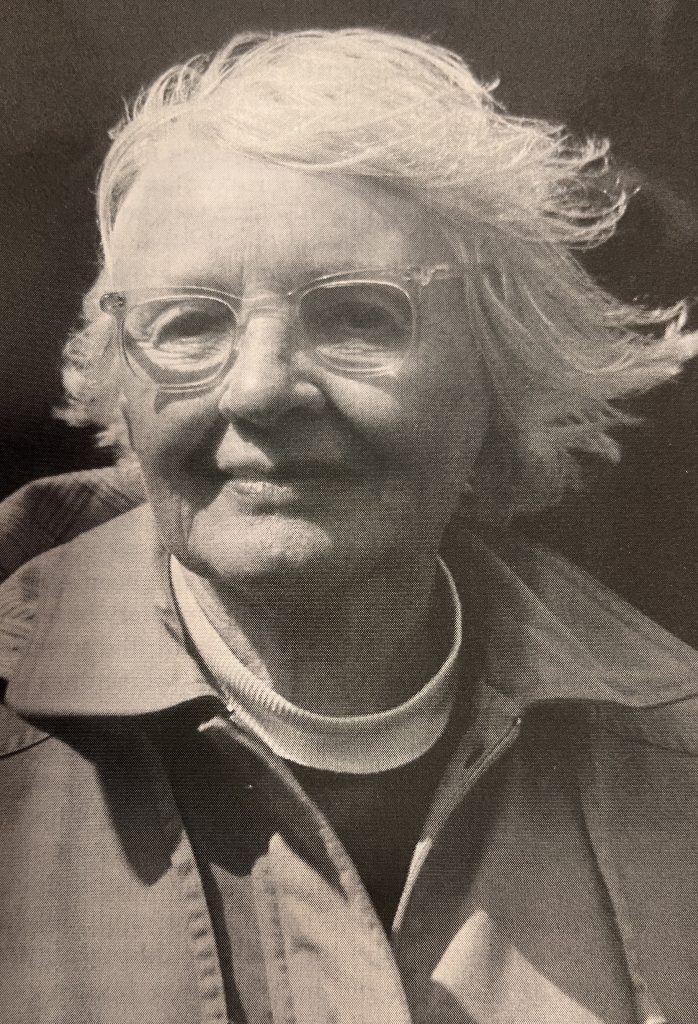
Born in Broad Street, directly opposite St Magnus Cathedral, Margaret Tait also has a commemorative plaque at the cathedral’s east end in the area sometimes known as ‘Poets’ Corner’. She trained as a doctor and served with the RAMC during WWII, before spending time in Italy learning film making. Tait returned to Scotland and set up a film company in Edinburgh, before moving back to Orkney where she spent the remainder of her life. She produced many short films as well as three volumes of poetry. None of her poems mention the cathedral specifically, and in general she seems to have had little time for religion, but in one poem, Other Gods, Other Ways, she imagines what the pre-Christian gods would have been like. In the poem she pictures them living amongst us. Here is an excerpt:
I don’t believe anyone worshipped those Gods.
The relationship was quite different.
They were superior friends, rather,
And not always even so superior.
They were fallible
As the invention of the Jews is not fallible.
Christ, I think, tried to soften that terrible Jehovah
Concept
While keeping its validity.
But he couldn’t do both,
And we’ve now the choice of the bog of self-sacrifice
Or the bare Moses-rock precipice of self-righteousness.
But long ago the gods here
Came and went
Among the stones,
Intent about their own business
And without the ferocious responsibility
Which the missionaries taught us.
Columba,
Augustine,
And then Knox
And finally the high priests of the Disruption,
Preaching
A natural aristocracy
But teaching, in spite of themselves,
Mean equality,
Got us all in such a muddle that we no longer know
Who we are….
J Storer Clouston (1870-1944)
Another writer who features in ‘Poet’s Corner’ is Joseph Storer Clouston. His family name dates back to Viking times, and his father Thomas was a pioneer in the field of mental health treatments. J Storer was a very prolific writer (probably best known nowadays for writing The Spy in Black, set in Orkney during WWI), and in the early twentieth century he was one of the literary group very keen on reclaiming Orkney’s Norse past. During the late 19th and early 20th centuries, many of the Norse sagas (written in Iceland in the 12th and 13th centuries) were translated into other languages for the first time. The Orkneyinga Saga was first translated into English in 1873, and it showed a sophisticated society with a strong sense of community. The early 1900s saw a general growth in the rise of nationalism, with countries and regions seeking to establish some form of cultural identity, which linked into a growing interest in folklore, myth and legend. All these factors led to Orkney’s rediscovery of its Viking heritage, promoted and developed by J Storer Clouston and Eric Linklater, amongst others.
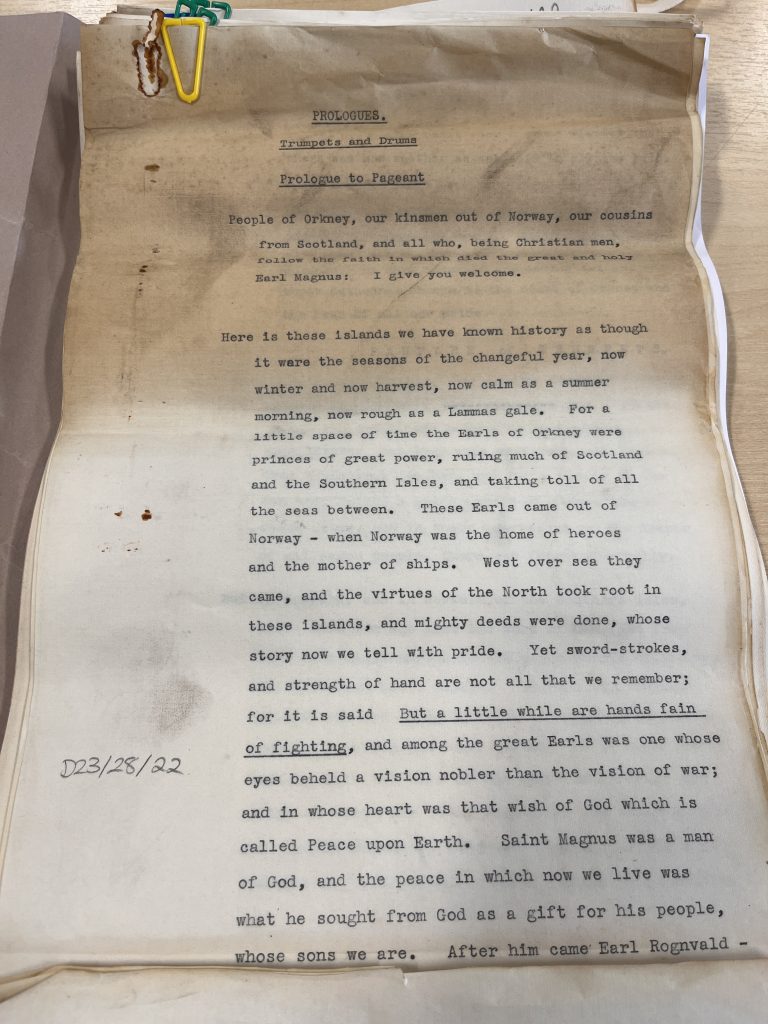
It is no coincidence that these two prominent writers and cultural figures were responsible for writing the script for the 1937 Octocentenary Pageant, celebrating 800 years of St Magnus Cathedral. The pageant took place on St Olaf’s Day, 29 July, 1937. A cast of some 600 performed to a combined audience of over 7000, telling the story of the coming of Christianity to Orkney, the murder of St Magnus, and the building of the cathedral. The Orkney Herald called it “the most magnificent dramatic event Orkney or the North had ever seen” and claimed that “not for another 100 years was such an event likely to be seen again”. The Orkney Library and Archive holds J Storer Clouston’s own copy of the narrator’s script, with annotations in his handwriting.
Robert Rendall (1898-1967)
Robert Rendall has more than earned his place in the part of St Magnus Cathedral dedicated to artists and writers. Once described by Stanley Cursiter as ‘a self-educated man who touched on genius’, Rendall is described on the cathedral plaque as ‘Poet and conchologist’, and part of his reputation does indeed rest on his identification and cataloguing of Orkney’s seashells, as well as several volumes of poetry. But he was also an amateur (in the best sense of the word) painter and archaeologist too, famously discovering the remains of the Broch of Gurness as he set up his painting stool.
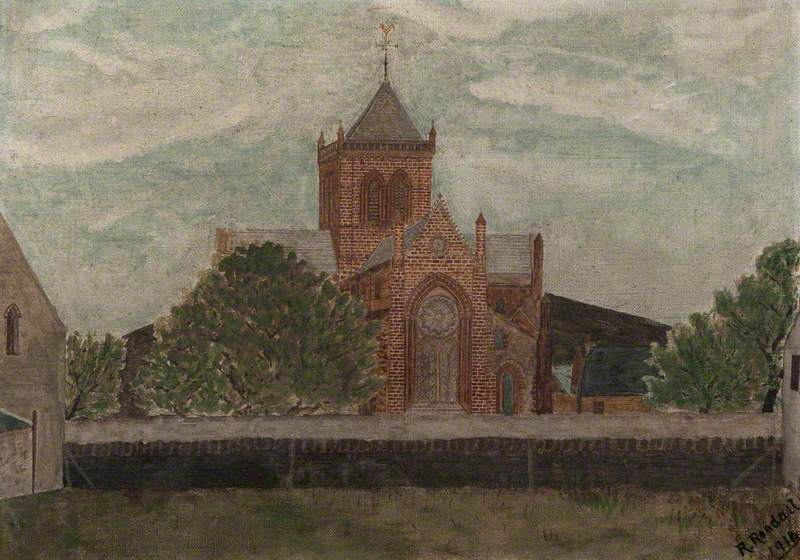
Rendall was a deeply religious man, a member of the strict Presbyterian sect known as the Plymouth Brethren. Perhaps it was for this reason that St Magnus Cathedral didn’t feature in his writing – although he did paint a picture of it.
David Horne (1877-1940)
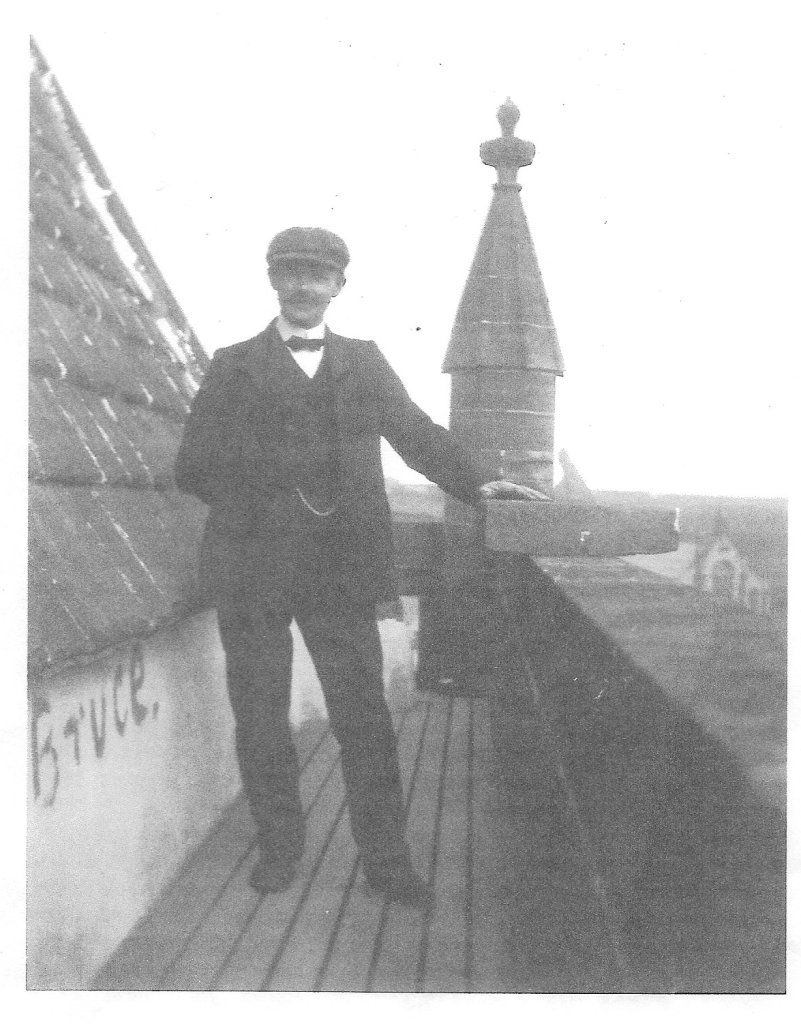
David Horne was one of those Orkney men who not only pursued a trade (that of butcher, as his father before him, both of them known affectionately as Porky Horne), but also made a considerable impact on Orkney society in other cultural context. Horne was a photographer, and he delighted in taking photos of his fellow Orcadians in all aspects of their lives, particularly in and around Kirkwall. But he was also a poet and prose writer, with two titles published by The Orkney Herald. He sometimes wrote his poetry in Orcadian dialect, as in The Twa Clocks – he imagines the cathedral during the early 20th century restoration, when the old clock was removed and set by, to make way for a new model. The two mechanisms have a spirited exchange of views, with the old clock eventually conceding that the only reason it had hung on so long was to witness the scuttling of the German fleet in 1919! In the poem St Magnus Cathedral Horne describes walking through the building, imagining everyone who has gone before, and how all the emotions and prayers over the years have soaked into the walls. Here are the first and third verses:
Great wonder temple of the North,
I stand within thy hoary gloom,
And watch amid thy darkened aisles
The past arise from out the tomb:
I walk through ancient Kirkwall town;
Among her bronzèd sailormen;
Her worthy craftsmen with their guilds;
Her Vikings bold of high renown;
The Lords and Ladies of the past
The common folks; the old; the young;
Those gentle saints who once did dwell
Within the sound of thy sweet bell;
Each soul that hoary Time has flung
Into oblivion’s mystic room:
The offspring of eight hundred years,
With and their hope, their joys, their fears.
………………..
I look again, but they have fled,
Those spirits I just gazed upon;
For a moment I could see them there;
Faces, faces, everywhere!
O ancient glory of the north
Within thy walls there dwells no gloom;
Thou dost reveal eternity:
Thou art a window – not a tomb!
WB Yeats (1865-1939)
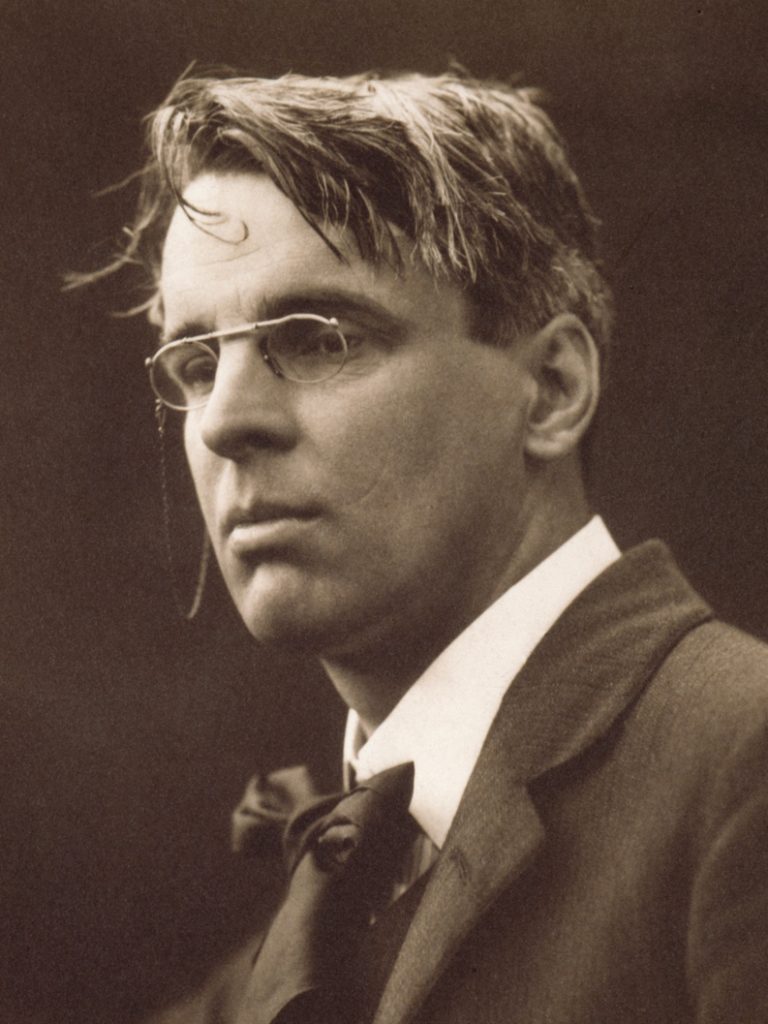
Although the celebrated Irish poet and Nobel laureate WB Yeats never visited Orkney, his influence can be detected the minute you walk in through the west door of St Magnus Cathedral. Above the door and modern vestibule is the magnificent west window created in 1987 and designed by Scottish artist Crear McCartney. McCartney tells us in his exposition that he was inspired by music and poetry whilst creating the design, including the works of Edwin Muir and George Mackay Brown. But he also cites the poem Sailing to Byzantium by WB Yeats, a meditation on the inevitability of getting old.
The verses are deeply symbolic, and the narrator imagines a golden city in the east, where he seeks wisdom and a form that will not decay. He desires to be cared for by the old, wise ones, who will remake him as a timeless, crafted object of art and knowledge, thus assuring his immortality.
……
O sages standing in God’s holy fire
As in the gold mosaic of a wall,
Come from the holy fire, perne in a gyre,
And be the singing-masters of my soul.
……
Byzantium is the old name for Constantinople, now Istanbul. During his epic journey in the 1150s, Rognvald the Earl of Orkney sailed to the Holy Land, and on his way home to Orkney he stopped off in Constantinople, where he and his men were offered places in the elite band of warriors guarding the Byzantine Emperor, known as the Varangian Guard. Perhaps in McCartney’s mind he saw that Rognvald not only sailed to Byzantium, but also that by being killed in 1158 and achieving sainthood, he did indeed achieve immortality. As do all creators of art, McCartney and Yeats included.
Reading list
The Spy in Black by J Storer Clouston
King Hereafter by Dorothy Dunnett 1982
Songs of Orkney by David Horne 1923
Murder the Foundation Stone by Elizabeth Hourston 1987
Crimsoning the Eagle’s Claw; The Viking Poems of Rognvaldr Kali Kolsson translated by Ian Crockatt 2014
Orkney and Shetland by Eric Linklater 1965
Rambles of a Geologist by Hugh Miller 1857
The Labyrinth by Edwin Muir 1949
Heritage of Dreams; a Sketchbook in Verse of Orkney by Vera Rich 1964
Four Poets for St Magnus collected by Elizabeth Graham Scarth 1987
The Pirate by Walter Scott 1822
The Voyage of the Pharos; Walter Scott’s Cruise Around Scotland in 1814 edited by Brian D Osborne 1998
The Collected Poems of W B Yeats 1950
All these books (and many more by Orkney writers) can be found at the Orkney Library and Archive.